
Healthcare knowledge does not arrive in clean rows.
It arrives as trial protocols, amendments, investigator brochures, safety reports, scientific papers, lab results, patient records, internal notes, regulatory submissions, and operational systems. Some of it is structured. Much of it is not. Some of it changes nightly. Some of it must be traced with care. All of it matters.
This is exactly the kind of environment where a simple vector index starts to feel too small.
A clinical operations team does not only ask: “Where is this phrase mentioned?” They ask: “Which changed protocol sections affect this patient cohort?” “Which trials share a therapeutic area and exclusion criterion?” “Which safety signal appears across reports, publications, and patient data?” “Which evidence supports this answer?”
Those are context questions.
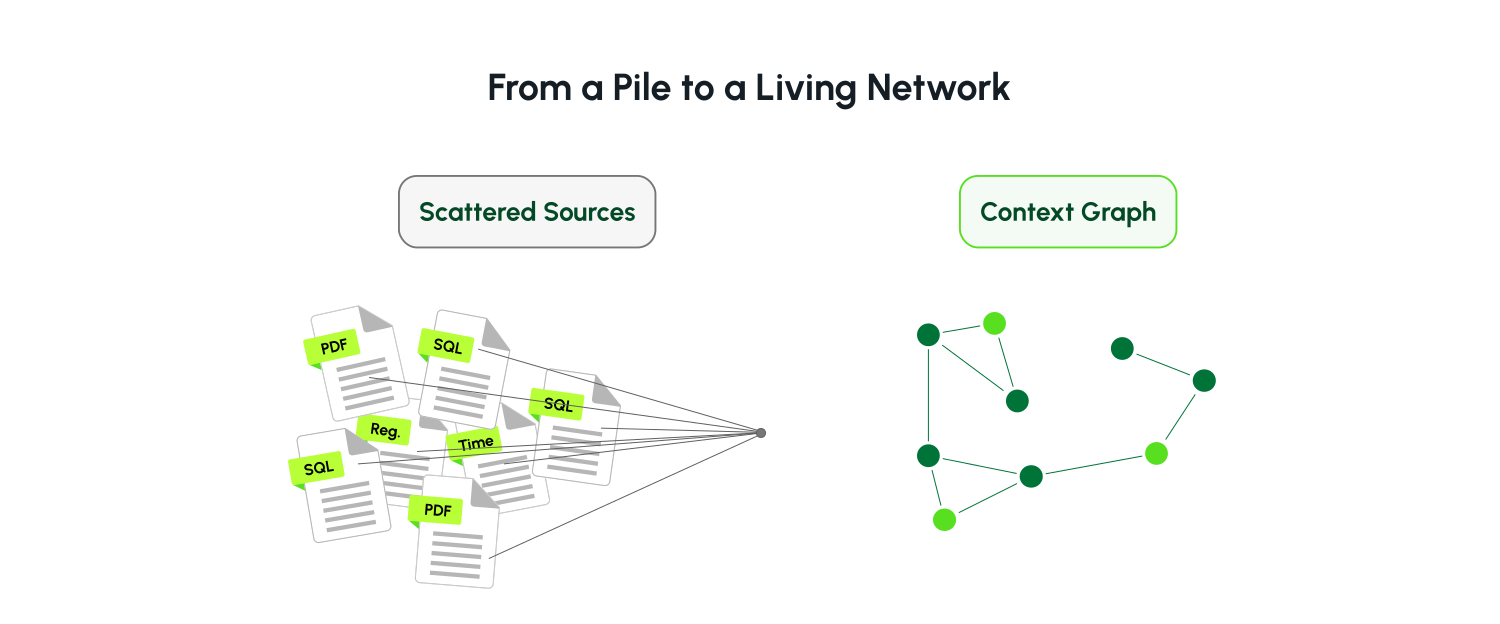
The first challenge is ingestion.
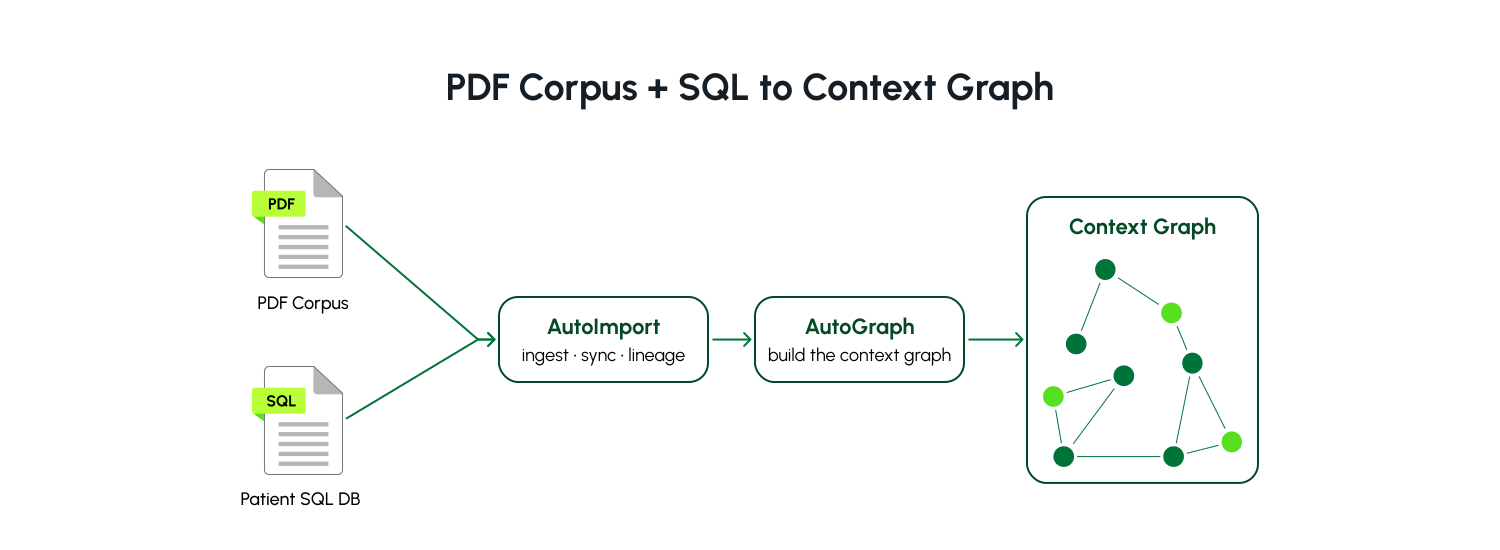
Healthcare and life-sciences organizations often need to combine large unstructured corpora with structured systems. An AI pipeline may need to import tens of thousands of PDFs while also linking to live SQL databases. It may need to preserve source history, content hashes, and lineage. It may need to reprocess only changed documents instead of rebuilding the entire corpus every time one source changes.
That is the role of our Source Manager* and ArangoLink* in the Arango AI Suite. They manage sources, link external databases, import files, and make structured and unstructured data available to AutoGraph. In the component example, a healthcare provider ingests a large clinical-trial PDF corpus and a live patient SQL database; ArangoLink handles the connections and synchronization, while Arango AutoGraph later builds the context graph.
The second challenge is organization.
Clinical repositories are rarely organized in the way AI retrieval needs. Folder names reflect departments, historical migrations, or whoever uploaded the file. They do not necessarily reflect therapeutic areas, endpoints, patient populations, contraindications, protocol versions, or regulatory concepts.
Arango AutoGraph changes the starting point. It receives structured and unstructured data and builds a usable context graph. In the AI Suite framing, the Context Graph Layer can support entity resolution, feature extraction from documents, AI-aided ontology generation and curation, and Virtual Graph capabilities.
This matters because healthcare AI cannot rely on “close enough” text similarity alone. It needs to know that two documents belong to the same therapeutic domain, that an entity appears across multiple trial documents, and that a structured database record can be interpreted alongside unstructured evidence.
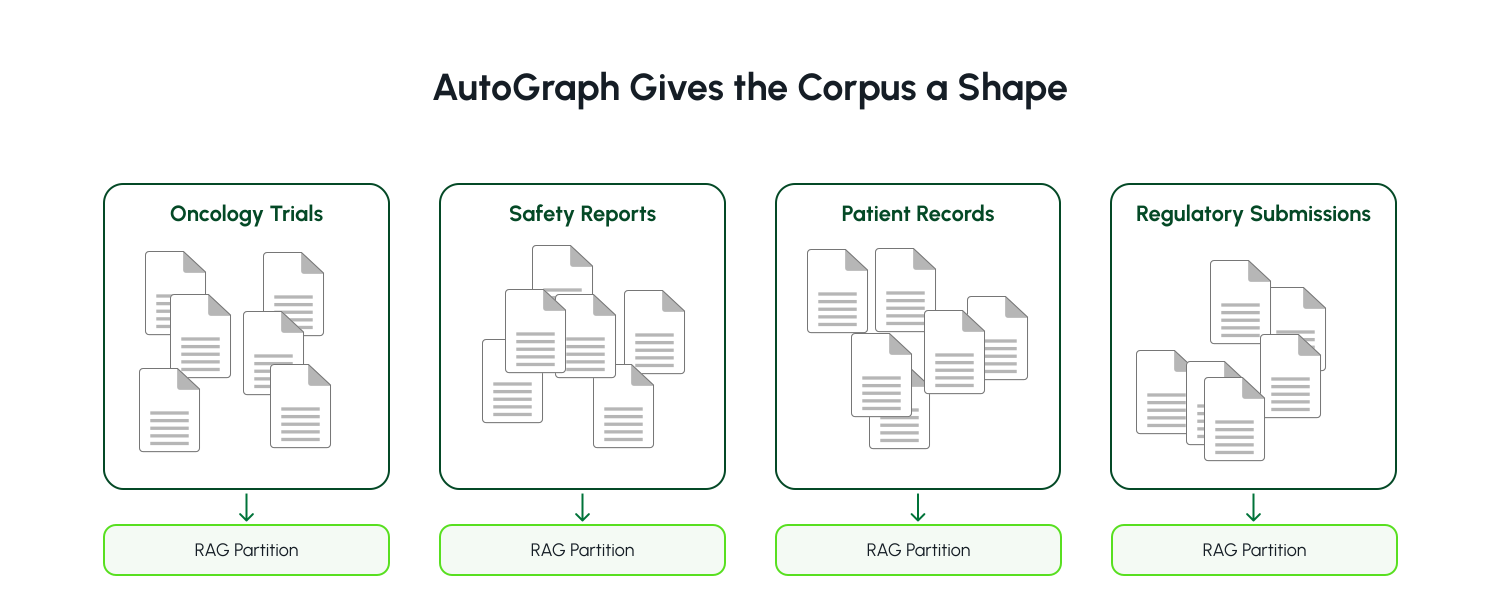
A practical healthcare workflow might look like this.
First, AutoImport brings in trial documents, medical literature, internal SOPs, and structured records. Second, Arango AutoGraph clusters sources into domains that reflect the corpus itself. Third, each domain becomes a RAG partition. Fourth, AutoRAG decides the retrieval strategy for each partition: some domains may need GraphRAG, some vector search, some image extraction, and some custom ontology treatment. Fifth, the Context Harness evaluates and improves retrieval quality.
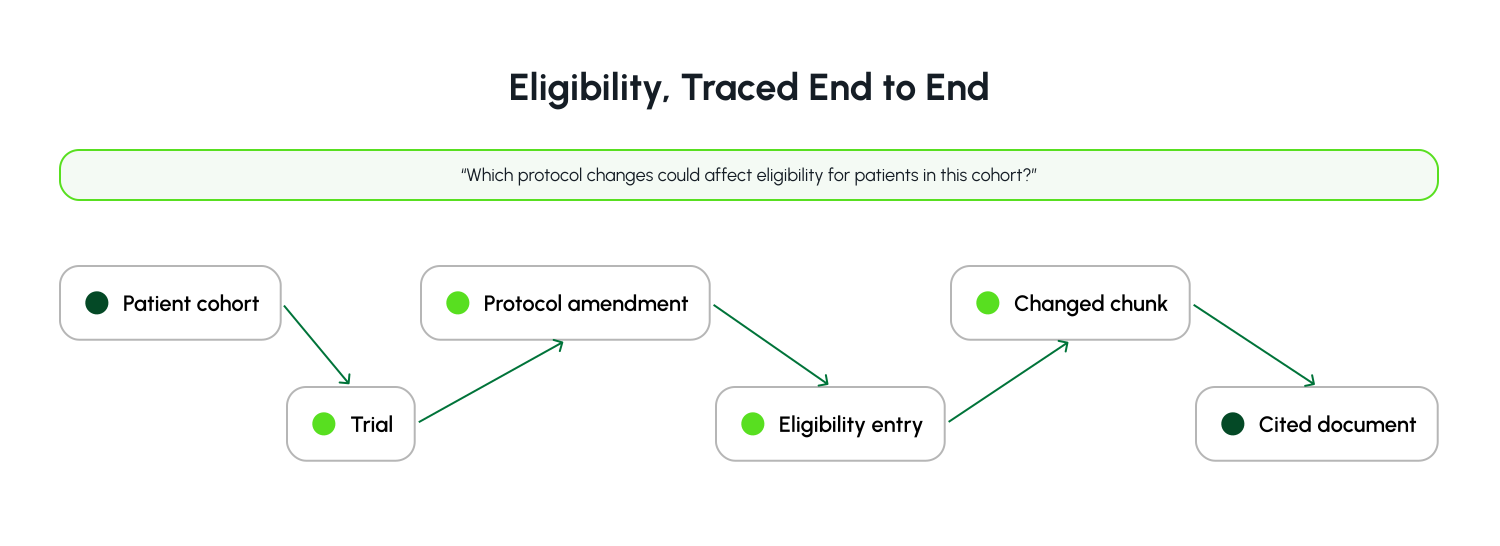
Now consider the query: “Which protocol changes could affect eligibility for patients currently assigned to a specific cohort?”
A text-only system may retrieve the most similar amendment. A context graph can do more. It can connect the patient cohort to structured attributes, the trial to protocol documents, protocol documents to chunks, chunks to extracted entities, entities to related eligibility criteria, and those criteria to changed sections.
The answer becomes a path, not just a paragraph.
The third challenge is provenance and trust.
Healthcare AI users do not just need an answer. They need to know where it came from. A response that cannot point back to the right source document, version, and supporting evidence is not good enough for high-stakes workflows.
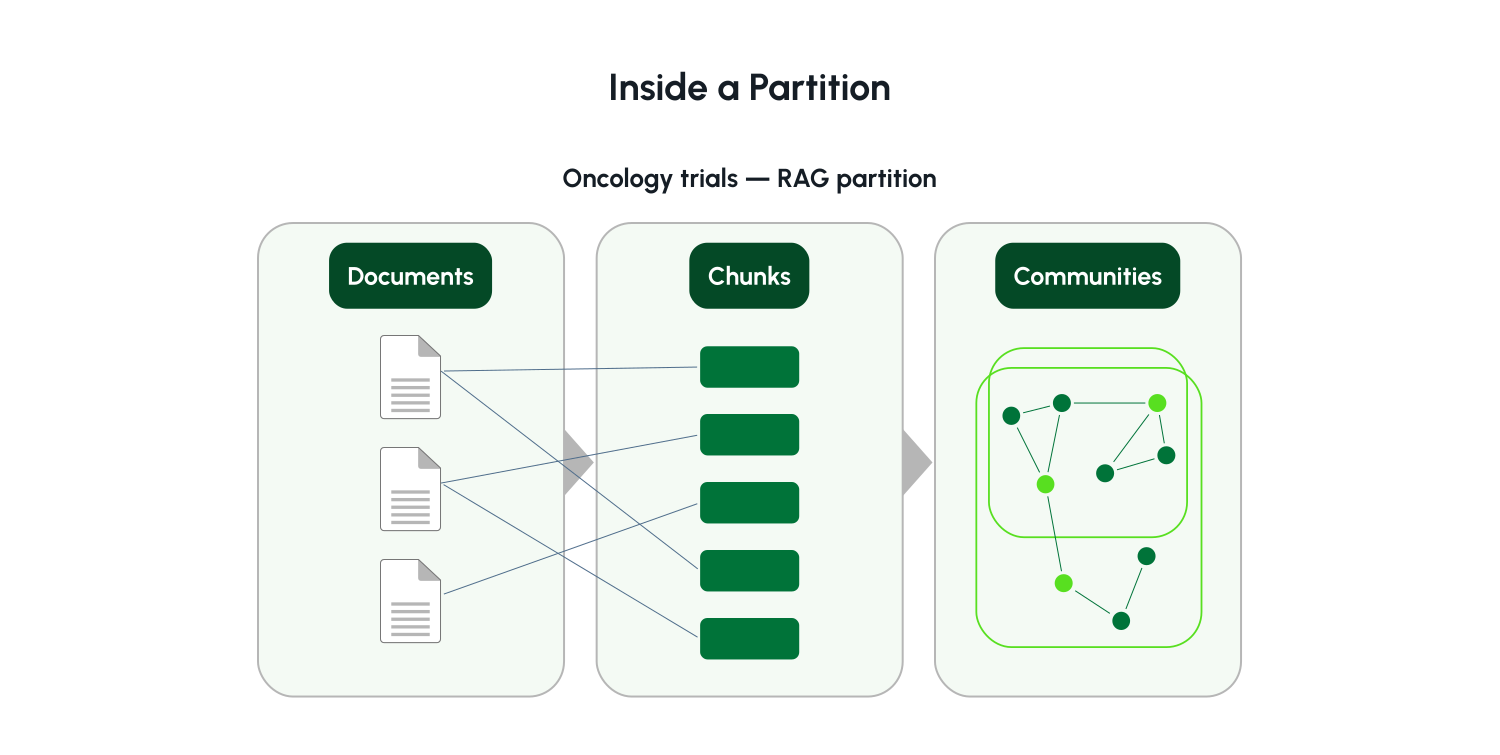
The Arango AutoGraph data model is useful here because it separates the corpus graph from the knowledge graph. The corpus graph organizes sources into domains and partitions. The knowledge graph then stores documents, chunks, entities, relations, and communities inside those partitions. This makes it possible to preserve document provenance while also enabling graph traversal across the meaning extracted from those documents.
The fourth challenge is change.
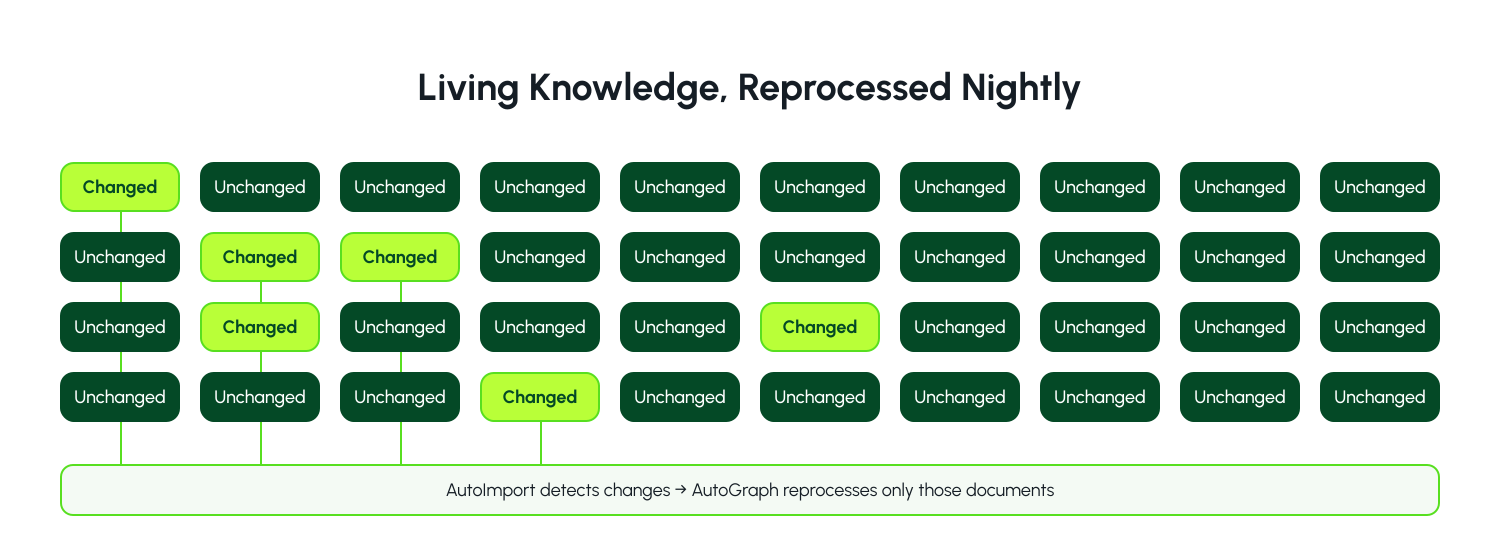
Clinical knowledge does not stand still. Trial documents change. New safety reports arrive. Database records update. External publications appear. In a naive architecture, every change threatens a rebuild. In a practical enterprise architecture, delta ingestion and partitioned retrieval let teams process changes more efficiently.
This is where the AI Suite framing becomes important. AutoImport monitors freshness and triggers delta re-ingestion. Arango AutoGraph and AutoRAG can work with partitions. The Context Optimizer can evaluate the resulting graph and retrieval system. The result is not a one-time demo, but a pipeline that can evolve.
For healthcare and life sciences, the promise is not “chat with your PDFs.” That is too small.
The promise is to build a context graph over clinical knowledge so AI can retrieve across documents, databases, entities, evidence, and relationships. It is to make the hidden structure of the corpus visible. It is to support the kind of multi-hop questions that clinicians, researchers, and operations teams actually ask.
Healthcare knowledge is chaotic because it is complex.
Arango AutoGraph does not pretend the complexity is not there.
It turns the complexity into structure.